1.952 lb/ft²
Calculators & charts
Phase 2 knowledge base
Sheet metal gauge chart and weight calculator in one reference page.
Gauge numbers are only meaningful when the material family is known. This page keeps the chart, conversion notes, and calculator together so estimators can check thickness and weight without leaving the route.
Need a fabrication quote? Use /quote/, call 647-407-0171, or email info@canadianmetalfab.com if that is faster.
- Compare four material families without leaving the route.
- Use the chart for gauge lookup and the calculator for takeoff math.
- The page is written for estimating, drafting, and commercial review.
- Reference first, quote handoff only when the part is real.
Fabrication context
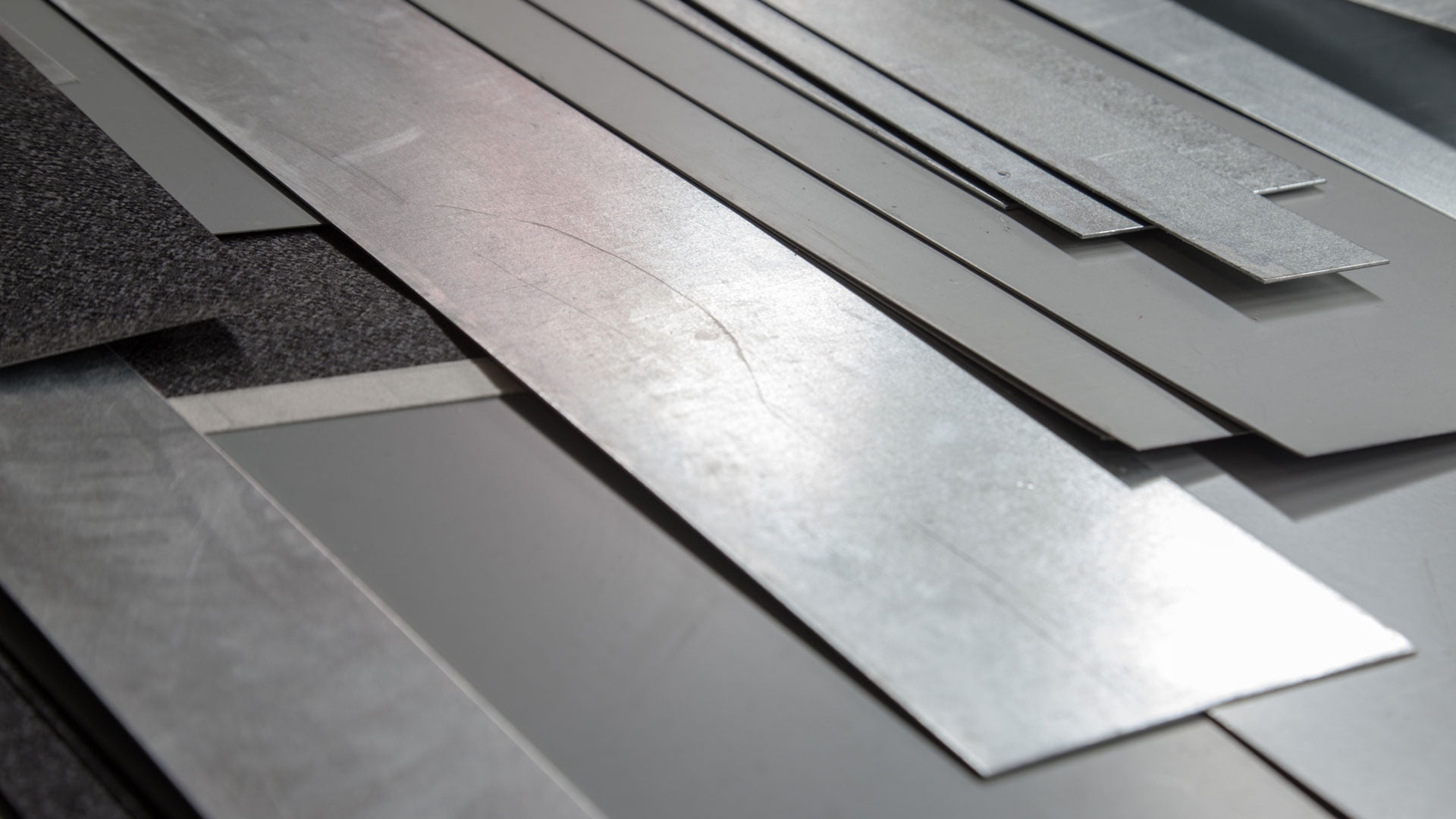
The page pairs reference lookup with quick weight math so the estimating question gets answered in one pass.
Why gauge differs by material
A gauge number is a reference point, not a universal thickness. The same gauge number can produce different decimal thicknesses and different per-square-foot weights when the base material changes. That is why the chart stays material-aware instead of collapsing everything into a single table.
Which is thicker: 18 gauge steel or 18 gauge aluminum?
18 gauge steel is much thicker than 18 gauge aluminum. The chart below shows the difference clearly: steel measures 0.0478 in, while aluminum measures 0.0403 in, and the weight gap is even wider.
2.107 lb/ft²
2.055 lb/ft²
0.569 lb/ft²
Material-aware gauge chart
The table keeps the four reference materials side by side so you can compare thickness and weight without guessing at the substrate.
Values are based on the reference rows in src/data/resources/gauge-chart.ts.
| Gauge | Steel | Galv. steel | Stainless | Aluminum |
|---|---|---|---|---|
| 10 | 0.1345 in3.416 mm5.493 lb/ft² | 0.1382 in3.510 mm5.644 lb/ft² | 0.1406 in3.571 mm5.778 lb/ft² | 0.1019 in2.588 mm1.438 lb/ft² |
| 12 | 0.1046 in2.657 mm4.272 lb/ft² | 0.1084 in2.753 mm4.427 lb/ft² | 0.1094 in2.779 mm4.496 lb/ft² | 0.0808 in2.053 mm1.140 lb/ft² |
| 14 | 0.0747 in1.897 mm3.051 lb/ft² | 0.0785 in1.994 mm3.206 lb/ft² | 0.0781 in1.984 mm3.210 lb/ft² | 0.0641 in1.628 mm0.904 lb/ft² |
| 16 | 0.0598 in1.519 mm2.442 lb/ft² | 0.0635 in1.613 mm2.593 lb/ft² | 0.0625 in1.588 mm2.569 lb/ft² | 0.0508 in1.291 mm0.717 lb/ft² |
| 18 | 0.0478 in1.214 mm1.952 lb/ft² | 0.0516 in1.311 mm2.107 lb/ft² | 0.0500 in1.270 mm2.055 lb/ft² | 0.0403 in1.024 mm0.569 lb/ft² |
| 20 | 0.0359 in0.911 mm1.466 lb/ft² | 0.0396 in1.006 mm1.617 lb/ft² | 0.0375 in0.953 mm1.541 lb/ft² | 0.0320 in0.813 mm0.451 lb/ft² |
| 22 | 0.0299 in0.759 mm1.221 lb/ft² | 0.0336 in0.853 mm1.372 lb/ft² | 0.0312 in0.794 mm1.282 lb/ft² | 0.0253 in0.643 mm0.357 lb/ft² |
| 24 | 0.0239 in0.607 mm0.976 lb/ft² | 0.0276 in0.701 mm1.127 lb/ft² | 0.0250 in0.635 mm1.027 lb/ft² | 0.0201 in0.511 mm0.284 lb/ft² |
| 26 | 0.0179 in0.455 mm0.731 lb/ft² | 0.0217 in0.551 mm0.886 lb/ft² | 0.0188 in0.477 mm0.773 lb/ft² | 0.0159 in0.404 mm0.224 lb/ft² |
| 28 | 0.0149 in0.378 mm0.608 lb/ft² | 0.0187 in0.475 mm0.764 lb/ft² | 0.0156 in0.396 mm0.641 lb/ft² | 0.0126 in0.320 mm0.178 lb/ft² |
| 30 | 0.0120 in0.305 mm0.490 lb/ft² | 0.0157 in0.399 mm0.641 lb/ft² | 0.0125 in0.318 mm0.514 lb/ft² | 0.0100 in0.254 mm0.141 lb/ft² |
final quote weights depend on alloy, finish, and geometry. Use the chart for reference and the calculator for rough takeoff planning, then confirm the final numbers against the actual part.
Weight Calculator
Use gauge or decimal thickness to estimate a part weight without leaving the chart page. This is the fastest way to get a planning number before the project turns into a formal quote request.
Weight Calculator
Weight Calculator
Estimate sheet weight by gauge or decimal thickness before the part becomes a quote.
Use this for planning and takeoff checks. final quote weights depend on alloy, finish, and geometry.
Per piece0.00 lb
Total0.00 lb
Weight / sq ft0.00 lb
Thickness0.0000 in
Nearest gauge18 gauge
Density0.000000 lb/in^3
Conversion guidance
Quick reminders for drafting, estimating, and spec review.
| Category | Why it matters | Reference |
|---|---|---|
| Length and width | The calculator uses the part footprint. | Weight = length × width × thickness × density. |
| Inches to millimeters | Useful when the drawing already uses metric dimensions. | 1 in = 25.4 mm. |
| Square-foot weight | Best for quick comparing across gauges and material families. | 1 sq ft = 144 sq in. |
| Gauge vs decimal thickness | Use gauge when the spec calls for a standard sheet reference. | Use decimal thickness when the project has a direct dimension callout. |
1 inch = 25.4 mm. 1 square foot = 144 square inches. Weight per square foot is density times thickness times 144.
Gauge chart FAQ
These are the questions buyers usually ask before they ask for a quote.
Which is thicker: 18 gauge steel or 18 gauge aluminum?
18 gauge steel is thicker than 18 gauge aluminum. In this reference chart, steel is 0.0478 in and aluminum is 0.0403 in, so the steel sheet also weighs more per square foot.
How do I estimate sheet weight from length, width, and thickness?
Multiply length × width × thickness × density. The calculator does that for you, and it also translates the result into a per-piece and total weight estimate.
When should I specify gauge vs decimal thickness?
Use gauge when you want to match a standard sheet reference. Use decimal thickness when the drawing or spec already gives the exact material thickness.
Low-pressure handoff
Have drawings and a target material ready?
Send the part size, material callout, and any thickness notes through the existing quote flow. It is the fastest way to move from a chart check to an actual fabrication discussion.
- No gated downloads or separate construction-only intake.
- Direct phone and email options stay available for quick questions.
- Best when you already have a part, detail, or spec to review.
Request a QuoteCall 647-407-0171
Use /quote/ for the cleanest handoff, or email info@canadianmetalfab.com if that is easier.
For quick contact, use /quote/, call 647-407-0171, or email info@canadianmetalfab.com.