Shop Welding for Fabricated Assemblies
Requirements reviewedMIG, TIG, and spot-welding requirements for drawing-defined steel, stainless-steel, and aluminum assemblies. Process, procedure, qualifications, inspection, documentation, and acceptance criteria are confirmed per project.
Is Our Welding Service Right for You?
Prototype, overflow, and production welding projects are reviewed against the drawing, joint details, material, volume, applicable standard, inspection needs, and schedule.
OEMs Needing Production Welding
You have recurring welding requirements and need the procedure, fixture, inspection, and documentation plan aligned before production starts.
- Applicable procedure and qualifications specified
- Fixture needs confirmed per assembly
- First-article inspection when quoted
Fabrication Shops at Capacity
Your welding department is backed up but customer requirements still apply. Overflow fit depends on the approved drawing, procedure, qualifications, inspection records, confidentiality, and required date.
- Capacity checked at RFQ
- Customer requirements documented
- Rush timing evaluated per project
Engineers Building Prototypes
Laser-cut prototype assemblies can be reviewed for joint design, fixtures, procedure, qualifications, inspection, and the required test or acceptance plan.
- Quantity fit reviewed per RFQ
- Works with laser-cut parts
- DFM feedback on weldability
Welding Processes
Process selection depends on material, joint design, thickness, position, appearance criteria, production volume, governing standard, and inspection requirements.
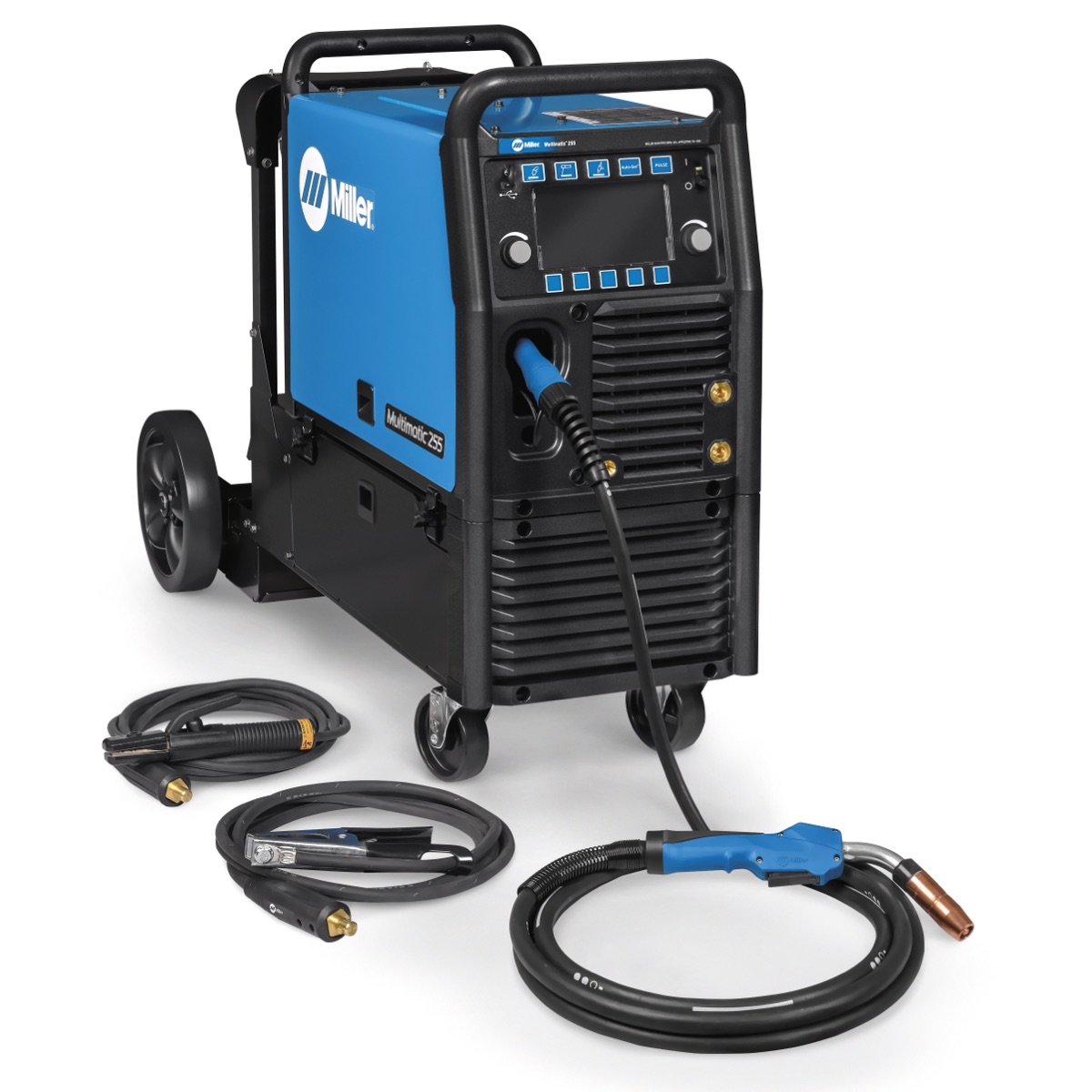
Miller Multimatic 255 & Wel-O-Matic 75kVA
The Miller Multimatic 255 supports multiple arc-welding processes, while the Wel-O-Matic 75kVA supports resistance spot welding. Machine availability does not by itself establish part feasibility, code coverage, procedure qualification, acceptance, or schedule; those are confirmed per assembly.
Materials We Weld
Common sheet-metal grades can be evaluated. Weldability, filler, shielding, procedure, qualifications, distortion control, and inspection depend on the exact material and assembly.
Mild Steel
Grade and thickness by projectSpecified hot-rolled, cold-rolled, or structural grades subject to drawing, procedure, qualification, and capacity review.
Stainless Steel
304, 316, 400 seriesSpecified stainless grades and finishes, with cleanliness, purge, appearance, corrosion, and documentation requirements stated in the RFQ.
Aluminum
6061, 5052, 3003Selected aluminum alloys and tempers may fit MIG or TIG welding after joint, thickness, distortion, filler, and inspection review.
Galvanized Steel
Pre-coated steelMIG welding with proper ventilation. HVAC, outdoor equipment.
What We Weld
These common assembly categories can be reviewed. Load-bearing, leak-tight, pressure, regulated, or appearance-critical work requires explicit design and acceptance criteria.
Frames & Structures
Equipment frames, machine bases, and supports when design authority, governing code, procedure, qualifications, and inspection requirements are defined.
Enclosures & Cabinets
Electrical enclosures, control cabinets, equipment housings with clean cosmetic welds.
Brackets & Mounts
Motor mounts, sensor brackets, mounting assemblies welded to spec.
Sheet Metal Assemblies
Spot-welded sheet metal assemblies, panels, covers, and multi-part fabrications.
Guards & Covers
Machine guards, safety enclosures, protective covers with welded construction.
Tanks & Containers
Hoppers, bins, and non-pressure containers where leak-test and acceptance requirements are defined; pressure-vessel capability is not implied.
Automotive Components
Exhaust components, heat shields, brackets for automotive applications.
Custom Fabrications
One-off prototypes and custom welded assemblies to your specifications.
Why Procurement Managers Trust Us
We know what keeps you up at night. Here's how we solve the problems other shops create.
"My usual shop is backed up 6 weeks"
You need parts, not excuses about capacity.
Our process: Current capacity, material, procedure, fixture, inspection, quantity, and required date are reviewed before a production schedule is confirmed.
"I send an RFQ and hear nothing for days"
Radio silence makes you look bad to your team.
Our process: RFQs are acknowledged promptly, with open drawing questions, scope gaps, expected quote timing, and the next action communicated after review.
"Every new supplier is a risk to MY reputation"
If they screw up, you take the heat.
Our process: Required company certifications, welder qualifications, procedures, inspections, and records are verified for the project before order acceptance. Review the documentation policy.
"I need it right the first time"
Rework kills your schedule and your margin.
Our process: The applicable procedure, acceptance criteria, inspection method, first-article needs, and record retention are agreed when required by the drawing or quote.
Welding FAQ
How are welding certification requirements handled?
State the governing code, company certification, welder qualification, procedure, inspection, and record requirements in the RFQ. Current documentation and the scope available for the project are confirmed on request before order acceptance; no certification or code coverage should be assumed from this page.
What welding processes do you offer?
MIG (GMAW), TIG (GTAW), and spot-welding requirements can be reviewed. Process and equipment fit depend on material, thickness, joint design, position, access, procedure, qualification, testing, and acceptance criteria.
Can you weld aluminum?
Aluminum MIG and TIG requirements can be reviewed. The Miller Multimatic 255 supports multi-process work, but process selection, feasibility, appearance, procedure, qualifications, testing, and acceptance criteria depend on the exact material and assembly.
Do you provide weld inspection and documentation?
Inspection and documentation can be quoted when the standard, acceptance criteria, procedure, qualifications, material records, inspection method, and report format are defined. Available records and responsibilities are confirmed before production.
What's the difference between structural and cosmetic welding?
Load-bearing welding requires design authority, an identified governing code, approved procedures and qualifications, and an agreed inspection plan. Appearance-led welding uses drawing-defined visual criteria. Fit is confirmed after the requirements are reviewed.
Can you weld my laser-cut parts?
Laser cutting and shop welding can be combined in one quoted workflow. Fit-up, joint design, material, procedure, qualifications, inspection, documentation, and schedule are reviewed; customer-supplied parts can also be evaluated.
Need Assemblies Welded This Month?
Send the drawing or STEP file with material, quantity, joint details, applicable code, procedure and qualification requirements, inspection needs, finish, and required date. We will confirm fit, open questions, quote scope, and schedule.
Standard and rush timing are confirmed after drawing, material, procedure, inspection, and capacity review.